Elk River
The Elk River in Southwest Missouri was named by early settlers in the region due to the presence of elk in the area during the early 1800s. The river system was an important water source and hunting ground for both Native American tribes and early European settlers. Eastern elk were once common in Missouri before being hunted to extinction in the state by the late 1800s.
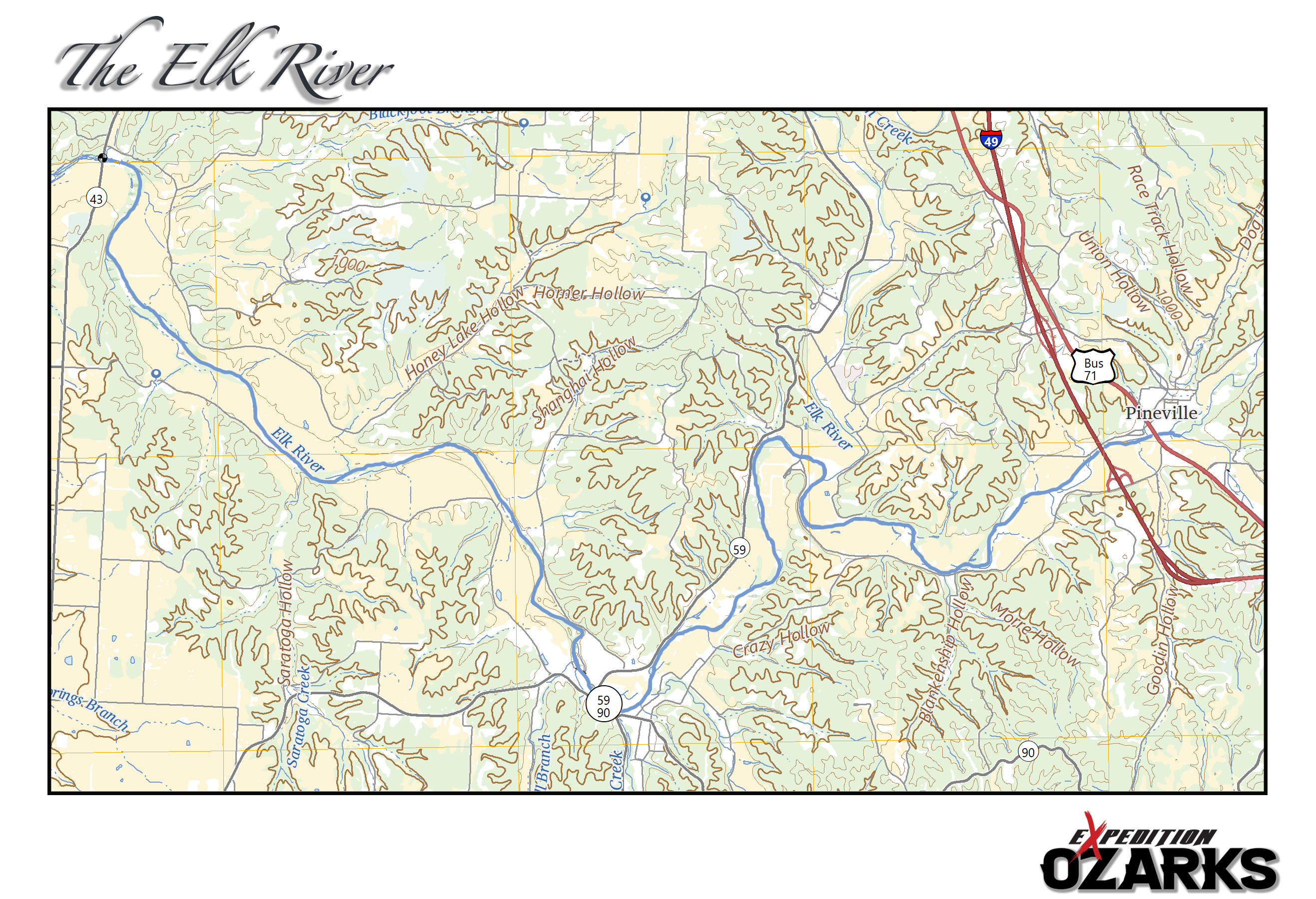
The Elk River watershed headwaters originate in Big Sugar Creek near Seligman, Missouri and Little Sugar Creek near Bentonville, Arkansas. These two streams merge near Pineville, Missouri to form the Elk River. Other major tributaries are Indian Creek and Buffalo Creek. Lost Creek and Honey Creek of the Cherokees Lake basin (tributaries of Neosho/Grand River) are included in this watershed assessment. The lower portion of Elk River is inundated by, and forms, the Elk River Arm of Grand Lake O’ the Cherokees.
The Elk River basin encompasses 1,032 square miles and the corners of Arkansas, Kansas, Missouri, and Oklahoma. Counties that are partially or entirely within the basin are Benton County, in Arkansas, Crawford County, in Kansas, Barry, McDonald, and Newton counties in Missouri, and Delaware and Ottawa counties in Oklahoma.
 Micropterus Lenox